
Desire, Hierarchy, and Dehumanization: A Critique of Anti-Caste Imagination
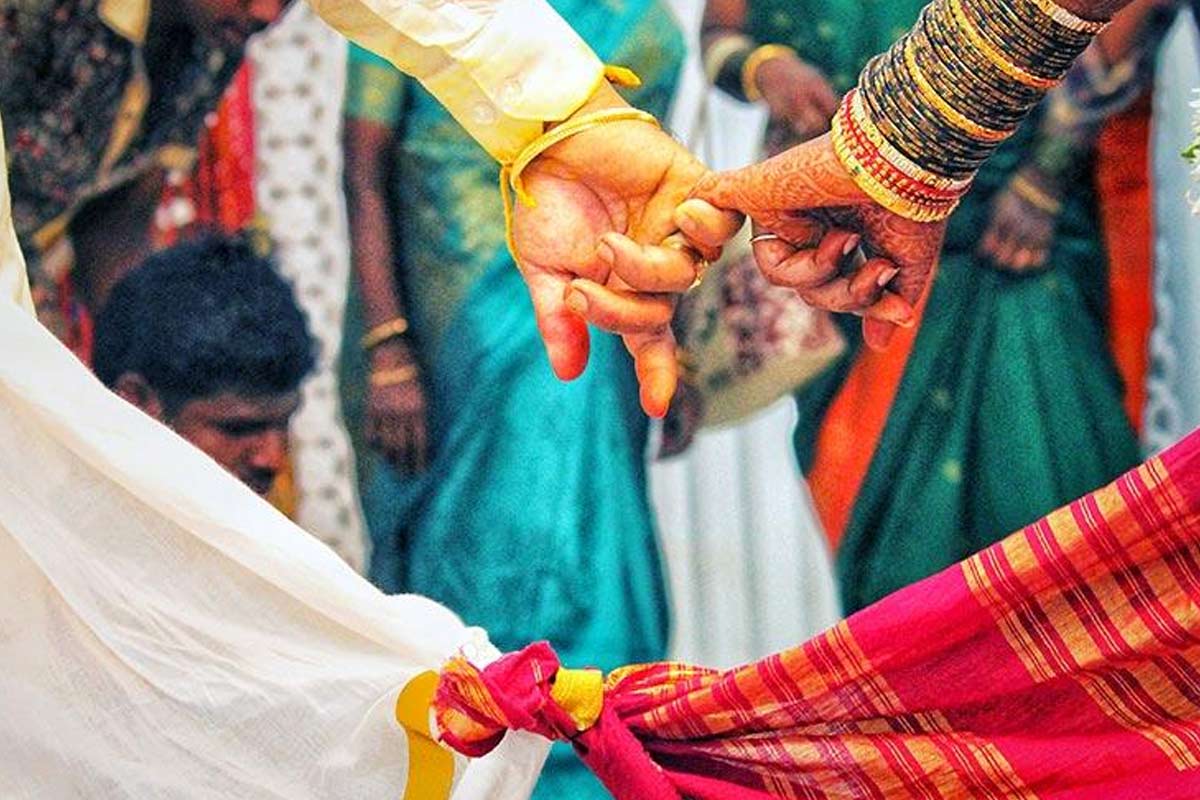
Image courtesy: The News Minute
A few days ago, I came across a video in which a speaker associated with a contemporary anti-caste movement made a striking claim. He argued that the caste system would truly end only when people from oppressed communities would be able to marry the daughters of Brahmins. The statement was clearly meant to sound radical, even revolutionary. Yet instead of reacting to it emotionally, I found myself wondering what kind of thinking makes such a statement possible in the first place. What assumptions lie hidden behind it? And why does a claim that presents itself as a challenge to hierarchy seem, on closer examination, to preserve the very hierarchy it wishes to destroy?
The remark may appear casual, but it reveals several layers of confusion, psychological, conceptual, and moral. To understand these layers, it is useful to place the statement in a wider intellectual context. In this essay, I will examine all three aspects and reveal the problems with the statement. A helpful starting point can be found in Frantz Fanon’s analysis of colonial psychology in Black Skin, White Masks, where he examines the symbolic meaning that desire can acquire in situations structured by hierarchy.
In the chapter often translated as The Man of Color and the White Woman, we find Fanon’s psychoanalytic and phenomenological examination of how colonial racism warps interracial desire. He focuses specifically on the black (Antillean) man’s attraction to white European women, not as genuine love or mutual recognition, but as a symptom of deep alienation, an inferiority complex, and the desperate wish to become white (or at least be validated as equal to whites):
“Out of the blackest part of my soul, across the zebra striping of my mind, surges this desire to be suddenly white. I wish to be acknowledged not as black but as white. Now—and this is a form of recognition that Hegel had not envisaged—who but a white woman can do this for me? By loving me she proves that I am worthy of white love. I am loved like a white man. I am a white man. Her love takes me onto the noble road that leads to total realization. … I marry white culture, white beauty, white whiteness. When my restless hands caress those white breasts, they grasp white civilization and dignity and make them mine (Fanon 63).”
Fanon is not describing a healthy, natural, or universal sexual attraction. He is dramatizing the internal monologue of the colonized black man who has internalized the racist values of white colonial society. In that society:
Whiteness = civilization, beauty, dignity, humanity, power.
Blackness = savagery, ugliness, inferiority, worthlessness.
The black man’s “desire to be suddenly white” is therefore existential: he wants to escape the “fact of blackness” (the crushing epidermal/racial schema). A white woman becomes the ultimate symbolic prize.
Fanon is strongly critical of this tendency. The whole chapter, and in fact the book itself, can be read as an analysis of colonial psychopathology. Fanon states this even more clearly in other parts of the book. In the introduction, he writes about the “Negro who wants to go to bed with a white woman,” noting the latter is driven by “a wish to be white. A lust for revenge, in any case (16).” The goal of the whole work, he states, is “nothing short of the liberation of the man of color from himself” (10).
It is difficult not to notice the similarity between this psychological pattern and the claim that caste will end when one marries a Brahmin girl. Here, the Brahmin continues to function as the sign of higher status. The imagined act of marriage is not merely a personal relationship but a symbolic conquest. The hierarchy is not rejected; it is inverted. Instead of asking why Brahmin status should matter at all, the statement assumes that union with the Brahmin represents the ultimate form of equality. In this sense, the logic of the hierarchy survives even in the language of its supposed destruction.
The difficulty with such statements, however, is not only psychological. There is also a conceptual problem in the way caste itself is being understood. Those who seek the annihilation of caste have consistently located its institutional core in endogamy and have consequently proposed the promotion of inter-caste marriage as the primary instrument of its dissolution. This position finds clear expression in Waughray (2014, 378), who articulates the Ambedkarite framework as follows: “Ambedkar identified endogamy as the vehicle by which caste is maintained and replicated, and intermarriage as the solvent of caste. Legislation prohibiting discrimination on grounds of caste should contribute to identifying and reducing caste prejudice, including in social and intimate relations, and thereby possibly to the eventual dissolution of caste” (cited in Shah 105-106). The legislative and activist program that follows from this logic is straightforward: target endogamy, encourage inter-caste marriage, and the structural basis of caste will erode. However, as Jalki and Pathan (2015) and Fárek (2017) have demonstrated, this strategy rests on a fundamentally broken assumption. Accounts of caste built upon endogamy as its defining characteristic are, as Shah notes, “bound to produce anomalies,” meaning the framework does not occasionally fail the evidence but structurally and inevitably contradicts it. Even those most committed to ending caste may therefore be “ill-advised if they consider that targeting of endogamy is the correct way of going about it” (Shah 106).
There is, however, a deeper paradox embedded within this strategy that goes beyond its empirical inadequacy. The proposal that inter-caste marriage will bring about the annihilation of caste rests on a problematic assumption. If caste is functioning in a strict sense, then inter-caste marriage would not be a realistic possibility at all, because the system exists by preventing exactly such unions. On the other hand, if inter-caste marriage is already imaginable as a social or political solution, then this itself suggests that caste has already lost part of its hold over society. The statement, therefore, contains a paradox. It treats caste as a rigid and oppressive structure, yet at the same time assumes a degree of social flexibility that would not exist if that structure were fully operative.
The fact that one can openly propose inter-caste marriage as the means to destroy caste shows that the boundaries of caste are no longer functioning in their strict form. To present such a marriage as the decisive act that will end caste is, therefore, conceptually confused. It assumes the continued strength of a system whose weakening is already presupposed by the very possibility of the solution. In this sense, the problem is not only that the language of revolt preserves the imagination of hierarchy, but also that the structure being criticized is not clearly understood in the first place.
What appears as a radical statement thus reveals two confusions at once. It preserves the hierarchy it claims to oppose, and it misunderstands the structure it claims to destroy. The result is a discourse in which caste is constantly evoked but rarely understood.
There is yet another contradiction hidden in such rhetoric. Movements that claim to speak in the name of equality often end up reproducing other forms of inequality in their language. In the statement under discussion, the Brahmin woman is not treated as an individual with her own will and dignity. She appears only as a symbol, a token through which social victory is imagined. The emphasis is not on her choice, her agency, or her humanity, but on what her marriage would represent for others. The woman becomes the site upon which historical resentment is to be resolved.
Such language reflects what psychologists describe as the process of dehumanization. As Michelle Maiese (2003) explains, “Dehumanization is the psychological process of demonizing the enemy, making them seem less than human and hence not worthy of humane treatment. This can lead to increased violence, human rights violations, war crimes, and genocide.” This process is closely related to what social psychologists call deindividuation. In the same article, Maiese noted that “Deindividuation facilitates dehumanization as well. This is the psychological process whereby a person is seen as a member of a category or group rather than as an individual.” When individuals are viewed only as parts of a collective identity, the normal moral restraints that govern human interaction begin to weaken. As the same analysis observes, “Once certain groups are stigmatized as evil, morally inferior, and not fully human, the persecution of those groups becomes more psychologically acceptable. Restraints against aggression and violence begin to disappear… it may seem even more acceptable for people to do things that they would have regarded as morally unthinkable before.”
Seen in this light, the idea that social justice can be imagined in terms of conquering or possessing the women of another community reveals a deeply troubling tendency. What presents itself as the language of equality risks reproducing the very psychology of dehumanization that, in other historical contexts, has led to persecution, brutality, and the breakdown of moral restraint.
What makes this especially troubling is that such language is not just accepted, but even celebrated, as progressive. Statements that would otherwise be recognised as crude or dehumanizing become legitimate when directed at a group labelled as privileged. Moral judgement begins to depend not on the nature of the statement but on the identity of the person against whom it is spoken. In this way, the discourse of justice can slowly turn into a discourse of tribal loyalty, where individuals disappear behind collective categories.
The small remark with which this reflection began, therefore, reveals more than it intends. It shows how easily the imagination of equality can remain trapped within the logic of hierarchy. It shows how discussions about caste can proceed without a clear understanding of what caste is as a social structure. And it shows how the language of liberation can sometimes reduce human beings to symbols in a struggle for recognition.
Works cited
Fanon, Frantz. Black Skin, White Masks (translated by Charles Lam Markmann). Pluto Press, 1986.
Maiese, Michelle (July, 2003). “Dehumanization.” Beyond Intractability, updated by Heidi Burgess, June 2020, www.beyondintractability.org. Accessed 26 Mar. 2026.
Shah, Prakash. “Dissimulating on Caste in British Law.” Western Foundations of the Caste System, edited by Martin Fárek, Dunkin Jalki, Sufiya Pathan, and Prakash Shah. Palgrave Macmillan, 2016, pp. 85-123.
