
Nurturing the Soul of a Civilization: Where Childhood Meets Civilizational Consciousness
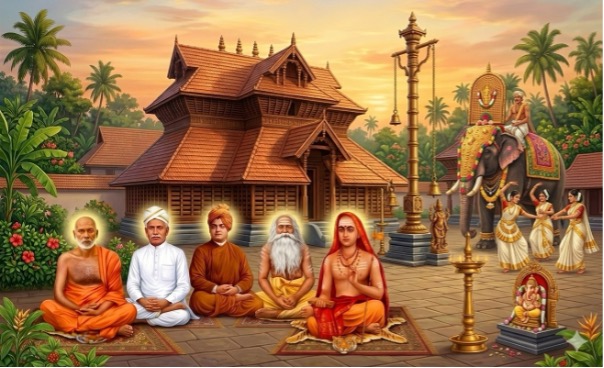
Image Courtesy: Pradeep Krishnan
Every civilization survives not merely through its monuments, scriptures or political institutions, but through the values it transmits to its children. Despite centuries of invasions, foreign domination and cultural upheavals, India has endured because every generation has found ways to pass on its spiritual, cultural, and ethical inheritance to the next. In modern Kerala, a southern State of India, one of the most remarkable initiatives dedicated to this sacred task has been Balagokulam.
Inspired by the enchanting yet profound childhood of Bhagavan Sri Krishna, Balagokulam is far more than a children’s cultural forum. It is a vibrant movement that seeks to preserve innocence, instil discipline, awaken pride in India’s ancient civilizational heritage, and nurture socially responsible citizens. Over the past five decades, it has quietly influenced lakhs of children and their families, leaving an enduring imprint on Kerala’s cultural landscape.
The Need for a Cultural Renaissance
The emergence of Balagokulam cannot be understood without appreciating Kerala’s social climate during the decades following Independence. Though the State witnessed rapid social transformation, impressive literacy, and significant economic progress, many thinkers felt that society’s spiritual and cultural foundations were steadily weakening.
The ideals of the Kerala renaissance, inspired by towering personalities like Sri Sankaracharya, Swami Vivekananda, Sree Narayana Guru, Chattambi Swami, and Ayyankali, gradually gave way to increasingly materialistic interpretations of life. Traditional institutions, temple culture, epics, indigenous arts and customs began to be viewed with indifference or even ridicule. Marxist influence, consumerism, minoritarianism, aggressive secularism, and cultural alienation slowly replaced civilizational confidence.
Many children grew up knowing little about the stories, symbols and values that had shaped Indian society for thousands of years. It was against this backdrop that Balagokulam emerged—not as a reaction against modernity, but as a constructive movement to reconnect children with their cultural roots in a joyful, creative and meaningful manner.
The Story Begins with Kesari
The roots of Balagokulam can be traced to an initiative that began long before the organization formally came into existence. On 1 March 1953, the Malayalam weekly Kesari introduced a special section for children. Behind this initiative stood the eminent thinker, philosopher, writer, and RSS pracharak P. Parameswaran (1927-2020), who wrote under the pen name “Gopichettan” (elder brother Gopi). Through stories, poems, puzzles and imaginative articles, he sought not merely to entertain children but to introduce them to India’s civilizational values while nurturing their literary and artistic talents.
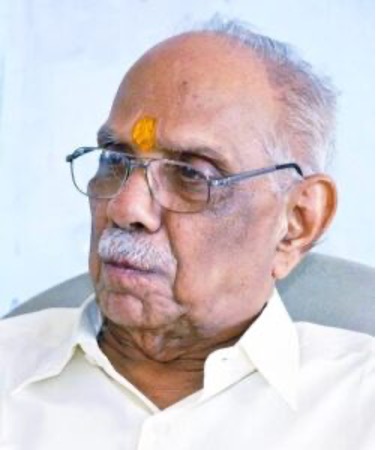
P Parameswaran (Gopichettan)
The response from young readers was overwhelming. As years passed, Gopichettan realized that merely reading stories was not enough. Children needed opportunities to meet one another, express themselves, and grow together. In the early 1970s, Kesari began encouraging children to write articles, recite poems, sing songs, and display their creative abilities. A formal membership campaign was launched through the January 1973 issue of the magazine.
In one memorable letter to his young readers, Gopichettan proposed a simple but revolutionary idea. Children associated with Kesari, he suggested, should gather every Sunday in their respective localities, narrate stories, read poems they had written themselves, sing songs, speak before friends, and develop their talents collectively. What appeared to be a simple suggestion soon proved historic. Children from different parts of Kerala enthusiastically embraced the idea. What had begun as a children’s page in a weekly magazine slowly transformed into a grassroots cultural movement.
From an Idea to a Movement
The origins of Balagokulam lie in the conviction of dedicated cultural thinkers that the surest way to preserve a civilization is to educate its children. Inspired by similar initiatives elsewhere in Bharat yet evolving its own distinctive identity in Kerala, the movement gradually assumed an organised form.
Its ideological foundations were strengthened by nationalist thinkers who believed that nation-building begins with character-building. Leaders associated with the Rashtriya Swayamsevak Sangh emphasised that the future of Bharat depended not merely on political change but on nurturing children rooted in Indian culture and values. Committed volunteers in Kerala transformed this vision into a practical movement centred on children.
The First Balagokulam
The first organized Balagokulam took shape at Karaparamba in Kozhikode during Navaratri in October 1972. Known as Karaparamba Shivaji Balagokulam, it began modestly with just seventeen children.
The initiative flourished largely due to the enthusiasm of M. A. Krishnan, then editor of Kesari, along with several dedicated volunteers who believed that children deserved a cultural space of their own.
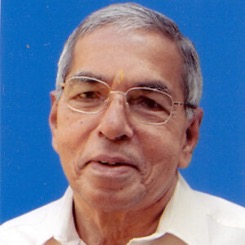
M A Krishnan, the senior RSS pracharak who initiated Balagokulam as a children’s movement
Every Sunday, children gathered for storytelling, poetry recitation, devotional songs and creative activities. They learned to speak confidently before others, discovered the joy of reading and writing, and developed a spirit of friendship and cooperation.
Senior personalities such as P. Ramachandran and RSS pracharak P. K. Sukumaran frequently visited these gatherings to narrate inspiring stories from the Ramayana, Mahabharata, and Indian history. The atmosphere was informal yet deeply educational. There were no buildings, no expensive infrastructure, and no elaborate organizational machinery. The movement’s greatest strength lay in its dedicated volunteers and the enthusiastic participation of children and parents.
Rapid Expansion Across Kerala
Inspired by the success of the Karaparamba experiment, similar balagokulams soon emerged in Kozhikode, Kannur, Malappuram, Ernakulam, Alappuzha, Kollam, Thiruvananthapuram, and several other districts. Initially, each unit functioned independently, conducting weekly gatherings where children sang devotional and patriotic songs, narrated stories, played traditional games, and participated in cultural activities.
Though the movement was spreading rapidly, it still lacked a common organizational structure that could coordinate these scattered efforts. Before such a framework could fully evolve, India entered one of the darkest chapters in its post-Independence history.
The Emergency Years
The declaration of the draconian Emergency on 25 June 1975 disrupted normal public life across the country. Many voluntary and cultural activities came under severe strain. Yet the ideals that had inspired Balagokulam continued to survive.
Ironically, these difficult years also strengthened the movement’s identity. During the silver jubilee celebrations of Kesari in 1976, children’s cultural programs associated with Balagokulam became one of the highlights of the celebrations. For many observers, this was the first public demonstration of Balagokulam’s immense potential as a children’s cultural movement.
The programmes received widespread appreciation and inspired many more volunteers to establish balagokulams in their own localities. Thus, what had begun through the pages of a weekly magazine acquired a recognisable public identity.
Why Krishna?
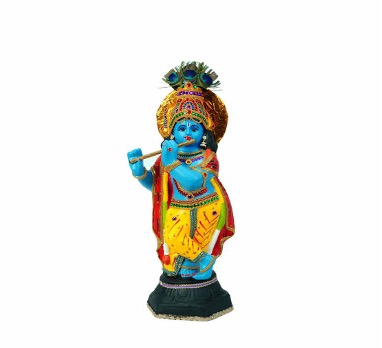
Sri Krishna, the inspiration behind the movement
The very name Balagokulam reflects its philosophy. Lord Krishna’s childhood represents spontaneity, joy, courage, friendship, compassion, intelligence and devotion. His playful life in Gokulam offers timeless lessons in leadership, love for nature, respect for elders and readiness to confront evil without losing innocence. Rather than presenting religion as dogma, Balagokulam introduces children to Krishna as an ideal companion whose life makes virtue attractive rather than burdensome. Songs, stories, games, festivals, and celebrations become instruments of value education. Its objective is not ritualism but character formation.
Learning Through Joy
Perhaps Balagokulam’s greatest strength lies in its educational methodology. Children do not sit through formal lectures. Learning takes place through participation. Weekly gatherings include devotional songs, patriotic songs, storytelling from the Ramayana, Mahabharata, and Bhagavata Purana, group discussions, yoga, games, physical exercises, memory activities, art, music, and creative expression.
Festivals become opportunities for learning rather than mere celebration. Janmashtami processions, Krishna costume competitions, Bhagavad Gita recitation, traditional games, folk arts, music and dance all become vehicles for transmitting India’s civilizational memory. Children gradually cultivate discipline, punctuality, teamwork, cleanliness, respect for parents and teachers, concern for society and love for the nation. These values are absorbed naturally through participation rather than imposed through moral instruction.
Beyond Religion
To describe Balagokulam merely as a religious organisation would be to misunderstand its broader mission. Its central objective is cultural education. Indian civilization has always regarded education as the harmonious development of body, mind, and spirit. Balagokulam attempts to revive this holistic vision through programmes that promote personality development, leadership, public speaking, literary and artistic talents, yoga, physical fitness, environmental awareness, social service, Indian history, and family-centred cultural activities.
Children are encouraged to study not only mythology but also the lives of saints, philosophers, scientists, national heroes, and freedom fighters. Culture, in the Balagokulam vision, is not something preserved inside museums. It is a living force that shapes citizenship.
Growth Across Kerala
From its modest beginnings in Kozhikode, Balagokulam steadily spread across Kerala. What started as a handful of neighbourhood gatherings soon grew into a vast network of children’s cultural centres functioning in villages, towns and cities alike.
Annual programs began attracting thousands of children and their parents. Over time, Krishna Jayanti celebrations, especially the colorful Shobha Yatras, emerged as the movement’s most visible public expression. The organization also introduced systematic training for volunteers to ensure that its activities remained educational rather than merely ceremonial. Teachers’ training camps, leadership workshops, children’s camps, cultural seminars, and personality development programs strengthened organizational quality while preserving the spirit of voluntary service.
Today, Balagokulam is widely recognized as one of Asia’s largest voluntary children’s cultural movements, with thousands of local units functioning across Kerala. As the movement expanded, its activities became deeply woven into Kerala’s cultural life. Every Sunday, children gathered to chant the Divine Name, greet one another with the traditional “namaste,” recite verses from the Bhagavad Gita, participate in go puja, learn bhajans, listen to inspiring stories, and play indigenous games. Summer camps, children’s conventions, shared meals, cultural tours, and annual art festivals strengthened friendships among participants while nurturing teamwork and leadership.
Large gatherings brought together children from different districts, where eminent scholars, saints, artists, and social leaders interacted with them. What had begun as a few neighborhood gatherings gradually evolved into a state-wide movement rooted in Kerala’s social and cultural fabric.
The Spectacle of Krishna Jayanti
For most Keralites, Balagokulam is synonymous with its magnificent Sri Krishna Jayanti Shobha Yatras. Every year, on Krishna Jayanti, Kerala undergoes a remarkable transformation. Roads become vibrant rivers of color as thousands of children dressed as Lord Krishna, Radha, Yashoda, Balarama, Sudama, Hanuman, Meera, Andal, and numerous other characters from India’s sacred traditions participate in elaborate processions.
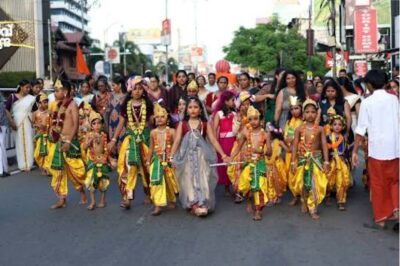
Thousands of children dressed as Sri Krishna, Radha, and characters from India’s sacred traditions participate in Balagokulam Shobha Yatra across Kerala
The shobha yatras come alive with the rhythmic beats of traditional temple percussion, melodious bhajans, Vedic chanting, patriotic songs, vibrant folk performances, martial arts displays, and spectacular tableaux portraying episodes from the Bhagavata Purana, the Ramayana, and the Mahabharata. Together, they transform ordinary streets into living galleries of India’s timeless civilizational heritage.
The celebrations are truly community festivals. Entire families participate with enthusiasm as parents proudly accompany their children dressed as Sri Krishna, Radha and other revered characters from the Hindu tradition. Grandparents watch with pride and nostalgia, while residents line the procession routes, decorating the streets with flowers, lamps and colourful rangoli, and showering petals on the young participants, creating an atmosphere of devotion, joy and cultural unity.
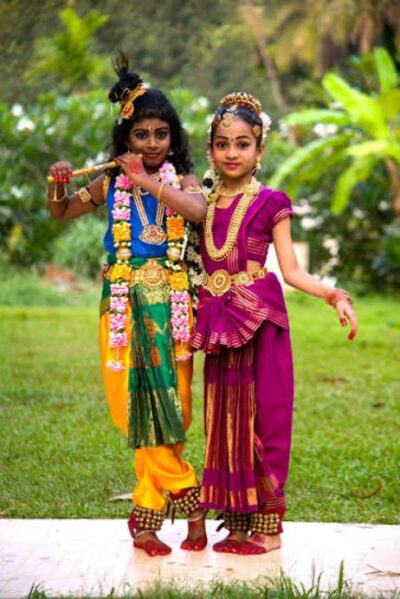
Young Krishna and Radha in traditional attire
Unlike many religious processions that are primarily ritualistic, Balagokulam’s Shobha Yatras celebrate childhood itself. They provide children an opportunity not merely to learn about Krishna but to experience the joy, innocence, and values associated with his life. For one day, countless towns and villages across Kerala seem transformed into Gokulam.
The Family as the Centre
One of Balagokulam’s most distinctive strengths is that its influence extends far beyond the child to embrace the entire family. As children begin singing bhajans at home, reading the Ramayana, Mahabharata, and other sacred texts, chanting Sanskrit prayers, celebrating festivals with a deeper understanding of their significance, and showing greater reverence towards parents and elders, the spirit of Balagokulam naturally permeates the household.
In the process, grandparents rediscover their cherished role as storytellers and custodians of tradition, parents become active partners in their children’s cultural journey rather than passive observers, and siblings come together in shared cultural and devotional activities. Thus, Balagokulam strengthens family bonds, fosters meaningful intergenerational interaction and ensures the seamless transmission of India’s timeless cultural values from one generation to the next, at a time when the pressures of modern life increasingly threaten the cohesion of the family unit.
Character Before Achievement
At a time when modern education often equates success with examination scores, professional qualifications, and material prosperity, Balagokulam presents a refreshingly different vision of education. It firmly believes that while academic excellence is important, it must be complemented by strong character and moral integrity. Knowledge, it teaches, acquires true meaning only when guided by wisdom; competition may drive individual success, but cooperation builds strong families, communities and nations.
Accordingly, Balagokulam seeks to nurture children who embody honesty, compassion, self-discipline, patriotism, courage, humility, self-confidence, respect for women, concern for nature and a spirit of selfless service. Its mission extends far beyond preparing children for successful careers as doctors, engineers, administrators or entrepreneurs. It strives to mould responsible, value-based citizens who possess not only intellectual competence but also the character, empathy and sense of duty necessary to contribute meaningfully to society and the nation.
Service as an Expression of Dharma
Balagokulam has never viewed culture as something confined to festivals or classrooms. Children regularly participate in environmental campaigns, cleanliness drives, tree plantation programmes, relief activities during natural disasters, visits to orphanages and old-age homes, and various forms of community service.
These experiences instil compassion, empathy and a deep sense of social responsibility far more effectively than classroom lessons ever can. For Balagokulam children, patriotism is not reduced to a slogan or a ceremonial observance; it becomes a way of life expressed through selfless service to society. This harmonious blending of spirituality with social commitment reflects the timeless Indian ideal that true Dharma is realized not merely through worship, but through dedicated service to fellow human beings.
Preserving Kerala’s Cultural Heritage
Equally significant is Balagokulam’s contribution to preserving and promoting Kerala’s rich artistic and cultural heritage. For countless children, it serves as their first introduction to bhajans, devotional music, classical and folk dances, traditional games, Sanskrit recitation, and a wide range of indigenous cultural practices that have enriched Indian society for centuries.
Through competitions, cultural festivals, annual gatherings, and artistic performances, Balagokulam not only nurtures young talent but also safeguards traditions that are increasingly threatened by the dominance of commercial entertainment and digital media. At a time when many children spend their leisure hours glued to television screens, smartphones, and social media, Balagokulam offers a meaningful alternative—one that inspires creativity, fosters cultural pride, and reconnects the younger generation with the timeless artistic and spiritual traditions of Bharat.
Kunjunni Mash and Balagokulam
Among the distinguished personalities who enriched the Balagokulam Movement, the legendary Malayalam poet Kunjunni Mash (1927-2006) occupies a special place. Revered by generations of children, he embodied the very qualities that Balagokulam sought to cultivate—simplicity, humility, creativity, and a deep love for India’s cultural heritage. With his rare gift of expressing profound truths through simple, child-friendly verses, Kunjunni Mash effortlessly won the hearts of young minds.
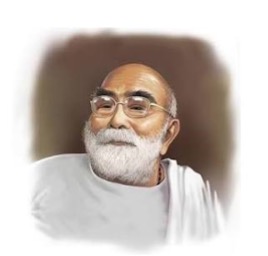
Kunjunni Mash, the favorite of children
His presence transformed Balagokulam gatherings into vibrant centers of imagination, laughter, poetry and learning, where children felt inspired to think independently, express themselves creatively and discover their innate talents. Rather than treating children as passive recipients of instruction, he encouraged them to question, create and explore the world around them with curiosity and confidence. His close association with Balagokulam lent the movement immense literary prestige and emotional warmth, leaving an enduring legacy that continues to inspire generations of young participants.
Cultural Confidence
Perhaps Balagokulam’s most enduring contribution has been its role in rekindling cultural confidence among young Indians. At a time when many children grow up with only a fragmentary understanding of India’s civilizational legacy, Balagokulam introduces them to the extraordinary intellectual, spiritual, and cultural achievements that have shaped the nation over millennia. By presenting India’s heritage in an engaging and accessible manner, it helps bridge the gap between modern education and the country’s timeless traditions.
Children are introduced to India’s remarkable contributions to philosophy, mathematics, astronomy, medicine, architecture, literature, music and spiritual thought. The Ramayana and the Mahabharata are explored not merely as ancient epics but as timeless sources of ethical wisdom, leadership, human psychology and moral reflection, whose lessons continue to remain relevant in contemporary life.
Such exposure nurtures a healthy sense of pride in India’s civilizational heritage while simultaneously fostering humility, inclusiveness and respect for all cultures and faiths. In the Balagokulam ethos, cultural rootedness is not a barrier to global engagement; rather, it provides the confidence and moral foundation that enable young minds to engage with the wider world with openness, understanding and mutual respect.
Balagokulam in the Digital Age
The challenges confronting today’s children are far more complex than those faced by earlier generations. In an age dominated by smartphones, social media and digital entertainment, excessive screen time, declining outdoor activity, weakening family interactions, rising stress levels and a growing sense of isolation are reshaping the very nature of childhood. Amid these profound social changes, the relevance of Balagokulam has become greater than ever before.
Through its weekly gatherings and diverse cultural activities, Balagokulam provides children with opportunities to build genuine friendships, engage in outdoor games, participate in meaningful discussions, work as a team and develop their creative and leadership abilities. More importantly, it nurtures a sense of belonging to a vibrant community rooted in shared values and cultural traditions—an experience that the virtual world can seldom replicate.
While recognizing the importance of science and technology in modern life, Balagokulam reminds society that no technological advancement can substitute the warmth of human relationships, the strength of family bonds, the wisdom of cultural traditions, or the enduring values that shape responsible and compassionate citizens. It offers a balanced path where children learn to embrace modernity without losing touch with the timeless ideals that have sustained Indian civilisation for millennia.
Looking Towards the Future
Today, Balagokulam is much more than a voluntary organisation or a children’s cultural movement; it is an enduring process of civilizational renewal. As India steadily advances towards becoming a leading global power, economic prosperity and technological excellence alone cannot define the nation’s greatness. The true strength of any civilisation lies in its ability to pass on its values, wisdom and cultural memory to succeeding generations.
Children who grow up with a deep understanding of their civilizational heritage are better equipped to engage confidently with the modern world without losing their identity or moral compass. The challenge before contemporary India is not to choose between tradition and modernity, but to harmonise scientific innovation with ethical values, technological progress with cultural rootedness, and global engagement with national self-respect.
In this larger national endeavour, Balagokulam offers a compelling model of holistic education. By nurturing children who are intellectually capable, culturally grounded, morally upright and socially responsible, it demonstrates how the timeless ideals of Indian civilisation can continue to guide future generations while preparing them to meet the opportunities and challenges of the twenty-first century.
A Model for the Entire Nation
Though Balagokulam was born in Kerala, its vision has already transcended the State’s boundaries, with vibrant centres functioning in cities such as Hyderabad and New Delhi. Yet, the movement’s larger mission—to nurture culturally rooted, morally upright, and socially responsible children—holds relevance for every corner of Bharat. Its ideals deserve to reach every village, town and city, inspiring a nationwide cultural awakening among the younger generation.
At a time when children are confronted with unprecedented cultural, social, and technological challenges, India needs institutions that shape character as earnestly as they cultivate intellect. A wider expansion of Balagokulam can help raise generations of young Indians who are firmly rooted in the nation’s civilizational ethos while remaining confident, forward-looking and fully equipped to meet the demands of the modern world. Physically fit, mentally resilient, disciplined, compassionate, patriotic and socially committed, such children will not merely inherit India’s rich cultural legacy—they will preserve it, enrich it and confidently carry it forward into the future.
The story of Balagokulam is a powerful reminder that the renewal of a civilization does not always begin in the corridors of power or through grand institutions and government programmes. More often, it begins quietly—in a small gathering of children beneath the shade of a tree, listening with rapt attention to a story from the Ramayana or the Bhagavata, singing a bhajan in unison, reciting verses from the Bhagavad Gita, playing traditional games, greeting one another with folded hands, and learning, through simple everyday experiences, the timeless values of respect, discipline, compassion and service.
It is from these seemingly modest beginnings that men and women of character are shaped. For more than five decades, Balagokulam has been performing this silent yet transformative task, preserving Kerala’s rich cultural heritage while moulding generations of socially conscious, culturally rooted and morally responsible young Indians. Whether viewed as a children’s movement, a cultural initiative, a character-building institution or a civilisational mission, its enduring significance lies in reaffirming an eternal truth: a civilization secures its future only when it invests in the character of its children.
In an age marked by rapid technological change, cultural homogenisation and shifting social values, Balagokulam offers a timeless model of holistic education—one that harmonizes tradition with modernity, spiritual wisdom with social responsibility, and cultural rootedness with global outlook. A nation that nurtures its children in the light of its civilisational ideals safeguards not only the legacy of its past but also the promise of its future.
In that sense, Balagokulam is far more than a children’s cultural movement. It is preserving India’s civilisational inheritance while nurturing the young custodians who will carry the ideals of Sanatana Dharma and the spirit of Bharat into the twenty-first century and beyond.
Editor’s note: Pictures/images courtesy of Pradeep Krishnan
