
When Humanities Become Ideology: The Questions IIT Bombay Must Answer
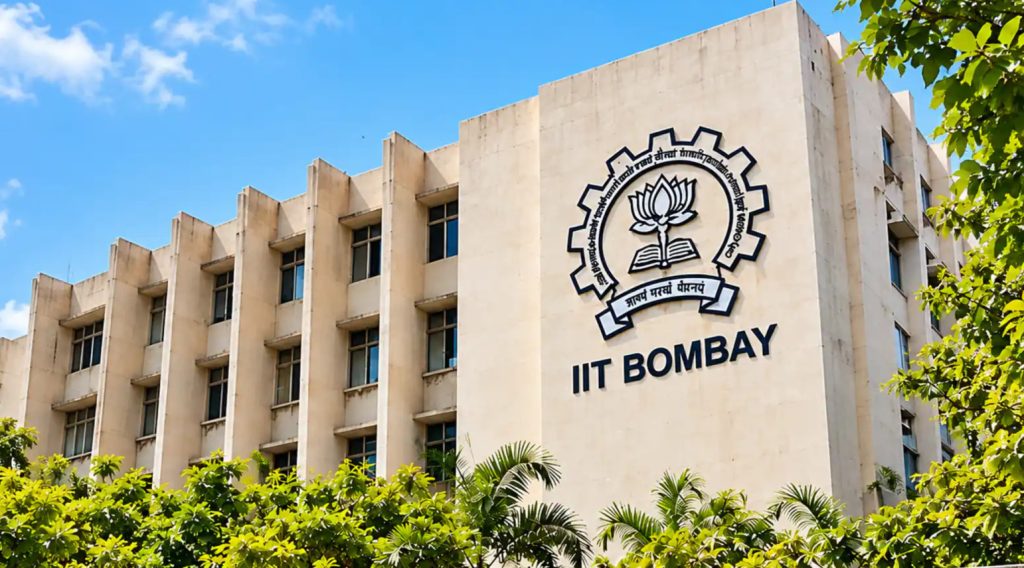
Image courtesy: Tehelka
An institution as prestigious as IIT Bombay must be able to enforce academic standards, protect students from discrimination, defend due process, and permit intellectual disagreement, all at the same time.
The death of IIT Bombay student Sahil Wakode has raised questions that cannot be answered either by sympathy alone or by immediately assigning a single cause. Wakode, a second-year BTech student, died by suicide on September 18 after an examination-hall incident in which he was allegedly suspected of using a mobile phone. His family subsequently alleged caste-based harassment. An FIR was registered against Professor Suryanarayana Doolla under Section 108 of the Bharatiya Nyaya Sanhita and provisions of the SC/ST (Prevention of Atrocities) Act. IIT Bombay removed Doolla from his position as Dean (Administrative Affairs), although he remained a professor. The Mumbai Crime Branch is now investigating the circumstances surrounding the death, including what happened in the examination hall and the interactions between Wakode and those present.
That sequence matters because several different questions are being conflated. Was there academic misconduct? What exactly happened in the examination hall? Was there caste-based discrimination? Did any conduct amount to abetment? Did institutional procedures work properly? And what responsibilities does an elite educational institution have towards students who enter it with different levels of preparation, different social backgrounds and different capacities to cope with failure? None of these questions should be settled by converting an allegation into a finding. A student’s death demands serious enquiry, but that enquiry must also require intellectual discipline.
What we know is that IIT Bombay is not an ordinary college/educational institution. It is an elite college of technology/engineering and was the second institute of technology set up after IIT Kharagpur. During the academic year 2025-26, it awarded 3,763 degrees to 3,442 students, including 1,713 undergraduate, 1,430 postgraduate, and 620 PhD degrees. The 620 PhDs were the highest number awarded by any IIT in a single academic year. It is an institution operating at the highest level of Indian technical education and research, and its standards therefore matter beyond one campus.
Moreover, their Department of Humanities and Social Sciences is also not a token department attached to an engineering college. Founded in 1958, it has 41 faculty members and disciplines including English Literature, Linguistics, Philosophy, Psychology, Sociology, Sanskrit and History. It offers PhD programs in its disciplines, an MA+PhD in Philosophy, research programs, and undergraduate humanities and social-science courses under the HASMED framework. The department had 265 students on roll in the latest annual report.
The existence of such a department is not a problem. It is necessary. Engineers work with human beings, not merely machines. Artificial intelligence, infrastructure, energy, medicine, urban planning and digital systems all have consequences for law, culture, economics, language, ethics and social life. A technically competent engineer who does not understand the society into which a technology is introduced is not necessarily an educated engineer. But it is only half the question. The more difficult question is what the humanities should actually do inside such an institution.
IIT Bombay’s sociology curriculum explicitly engages with caste, tribe, class, gender, religion, secularism, communalism and nationalism. Its course on Indian Society also lists scholarship dealing with Hindutva and majoritarianism. These are legitimate subjects of academic study. But the legitimacy of a subject does not exempt it from academic scrutiny.
So, the legitimate question is simpler: does an elite humanities department allow competing interpretations of the society it studies? Caste should certainly be studied, and caste discrimination should certainly be studied. But students should also be able to examine the enormous diversity of Hindu social and philosophical traditions, reform movements, constitutional debates, affirmative-action policy, competing theories of caste and the limitations of identity-based explanations. A student should be able to question a dominant interpretation without being treated as morally suspect for doing so. Intellectual seriousness requires the ability to distinguish between a fact, an interpretation, an argument, and a contested proposition.
This does not mean that every interpretation offers equal evidentiary weight. Nor does it mean that criticism of Hinduism is inherently anti-Hindu. A university must be free to examine caste hierarchy, religious authority, social exclusion, Hindu nationalism, and majoritarian politics critically. But Hindu traditions themselves contain centuries of argument about dharma, caste, ritual, authority, devotion, knowledge, and liberation. Treating Hinduism only through a contemporary political vocabulary would therefore be as intellectually restrictive as refusing to examine its social problems.
The documented research interests of IIT Bombay faculty illustrate why this distinction matters. Professor Suryakant Waghmore’s publicly listed work includes research on social exclusion, caste, Dalit politics, Hindu cosmopolitanism, and majoritarianism, while his published writing has addressed Hindu nationalism and caste politics. None of this establishes that Waghmore, or IIT Bombay’s HSS department, is anti-Hindu or discriminates against Hindu students. It would be irresponsible to make that leap. What it does establish is that students encounter faculty with identifiable scholarly interests and intellectual positions. The legitimate institutional question is whether students are also given sufficient space to examine competing interpretations and to challenge the premises of what they are taught.
That is what academic freedom should mean in practice. It should protect a professor’s right to teach controversial material and a student’s right to question it. If a student challenges an interpretation of caste, religion, nationalism, or discrimination, that disagreement should not itself become evidence of prejudice. Equally, criticism of Hinduism or caste should not automatically be dismissed as hostility to Hindus. The academic task is to establish what the evidence says.
This is where we can consider Steven Hassan’s BITE model, which can be used cautiously, not as a diagnosis of IIT Bombay or of any individual, and certainly not as evidence that the university operates as a coercive organization, but as a warning about intellectual conformity. Hassan’s framework concerns behavioral, information, thought, and emotional forms of control. Applied narrowly to academic life, the useful question is whether students are discouraged from encountering competing information, whether complex questions are reduced to rigid binaries, whether interpretations are presented as unquestionable facts, or whether disagreement is converted into a moral failing.
A university should cultivate precisely the opposite habits. Students should be encouraged to ask: What is the argument? What evidence supports it? What is the counterargument? Is this a fact or a theoretical interpretation? What evidence could change our minds? That is not the pursuit of social justice. It is scholarship.
Indian educational thought offers a useful foundation for this approach. Swami Vivekananda described education as “the manifestation of the perfection already in man” and associated education with the formation of character, strength of mind, expanded intellect, and self-reliance. Rabindranath Tagore’s educational experiment at Santiniketan similarly sought to move beyond mechanical instruction, combining academic learning with nature, creativity, arts, and the development of the whole person. Visva-Bharati’s own history records that Tagore deliberately created opportunities beyond narrow intellectual and academic pursuits to develop the manifold faculties of human personality. These formulations are very different from the structure of a modern IIT, but the underlying focus remains useful: education should enlarge the capacity to think rather than merely deposit information in the mind.
A student can memorize the vocabulary of caste, discrimination, privilege, or inclusion without necessarily acquiring the intellectual discipline to establish whether a particular claim is supported by evidence. A student can know the definition of a river without knowing how to recognize and understand the impact of a river. Education is therefore not simply information transfer. It is the formation of judgement.
That distinction becomes particularly important in disciplinary proceedings. There is a difference between saying, “I cannot stand this person,” and saying, “I disagree with this person’s opinion.” The first is an emotional reaction; the second can become the beginning of intellectual inquiry. Likewise, research should seek to discover what the evidence shows rather than begin with a conclusion and search selectively for supporting evidence. The present IIT Bombay controversy therefore demands a distinction that should be elementary in any serious academic institution: an allegation is not a finding, a complaint is not a conviction, and an opinion is not evidence.
The SC/ST Act is a particularly sensitive part of this controversy. Wakode’s family has alleged caste-based harassment, while the FIR includes provisions of the Act. IIT Bombay and its Faculty Forum have disputed aspects of that account, including saying that Wakode had not approached the institute’s SC/ST Cell with a complaint. The Faculty Forum has also publicly defended Doolla and said that he was following institutional examination procedures. These are competing claims, not established findings. The Crime Branch investigation is therefore crucial.
The fact that an FIR has been registered does not establish that the SC/ST Act was misused. At the same time, the absence of a previous complaint to the SC/ST Cell does not by itself establish that caste discrimination did not occur. The proper question is whether the evidence establishes the alleged conduct and whether that conduct meets the statutory requirements. A law designed to protect SC and ST citizens must be taken seriously when a genuine complaint is made. But seriousness cannot mean presuming guilt. This distinction is not merely legal. It is educational. A university that teaches students to question assumptions cannot suspend that principle when a controversy becomes politically or emotionally charged.
The wider IIT data make the need for careful analysis even clearer. Twenty-three IITs recorded 45 student suicides between 2020-21 and 2024-25. Twelve of the deceased students were OBC, nine were SC, and seven were ST; 16 belonged to the General category and one to EWS. IIT Hyderabad recorded seven suicides during the period; IIT Kharagpur, IIT Delhi and IIT Kanpur recorded six each; IIT Madras recorded five and IIT (BHU)-Varanasi four.
These numbers need serious consideration, but they do not provide their own explanation. Twenty-eight of the 45 deceased students belonged to SC, ST, or OBC categories, but the figures alone cannot establish that caste discrimination led to their deaths, nor can they establish that these groups faced a higher risk without comparing the figures with their representation in the IIT population. The category of a student is relevant to investigation; it is not an explanation in itself.
That caution is equally necessary when discussing academic attrition. Data obtained from IIT Bombay through an RTI application show that 312 students in various postgraduate programs exited under the institute’s applicable early-exit provisions between 2019 and 2023, including 183 General, 86 OBC, 35 SC, and eight ST. These figures cannot simply be described as evidence of discrimination. Nor should they be dismissed. They demonstrate that students from different categories experience different educational trajectories and that those trajectories deserve closer study. If particular groups are thought to be disproportionately affected, the proper research questions involve preparation, economic circumstances, academic workload, social isolation, discrimination, institutional support, language, family expectations, and other factors. The answer cannot be obtained merely by looking at a caste column.
There is also a deeper lesson about merit. Education systems can confuse selection with education. A student who performs poorly in one competitive examination can easily be labelled a “bad student,” even though the examination may have measured only a narrow moment of preparation, opportunity, or performance. Elite higher education faces a more sophisticated version of the same problem. Admission establishes a threshold; it does not establish the complete intellectual or emotional development of the person admitted. When admission standards themselves are different, then the problem gets compounded.
This does not mean turning IITs into hospitals or sanatoriums for every unhappy, unprepared, or unsuccessful student. An elite technical institution has a legitimate academic mission. Students must meet standards. Examinations must mean something. Academic dishonesty cannot be excused merely because a student is under pressure or belongs to some caste category. Teachers must be able to enforce examination rules. But enforcing a rule and determining the consequences of violating it are different institutional acts. Both require clear procedures and evidence. IIT Bombay itself said that no formal disciplinary action had been initiated against Wakode before his death and later apologized for its earlier communication about the circumstances surrounding his death, acknowledging that the details remained under investigation. That sequence is itself a reminder of why institutional communication should be governed by the same evidentiary discipline expected of academic research.
The responsibility of a university is not to guarantee that nobody ever experiences failure. Parents cannot prevent every rejection, criticism, or disappointment. Teachers cannot remove every pressure from a student’s life. Universities cannot guarantee that every young person will always be emotionally secure. But education should also teach students that failure is survivable. This is one reason, for example, that the analogy of sport matters. A child who plays regularly learns that losing a match does not mean the end of the world. A referee can make a decision one dislikes, another player can be better, and one can make a mistake and still return to the field the next day. The lesson is not that failure is harmless. It is that “I have lost” is not the same as “I am finished.”
Universities can cultivate a similar resilience, i.e., sporting spirit without lowering academic standards. They can make clear where students can seek help, ensure that serious distress is recognized, and make support available without treating help-seeking as weakness. Academic misconduct must have consequences when established, but those consequences should operate within procedures designed to prevent arbitrary or disproportionate institutional punishment. Academic-integrity protocols should protect honest students, students accused of misconduct, and teachers alike. This is where the idea of prajna becomes useful. Intelligence is not the same as judgement. A technically brilliant institution can still make poor institutional decisions if it loses patience, does not self-correct, and pays no attention to the person behind the administrative file. Compassion does not mean excusing misconduct. Rigor does not mean presuming guilt. A mature educational institution needs both.
Another issue is that if humanities deserve a place at IIT Bombay, what should be reciprocal? The question should not merely be, “Why should engineering students study humanities?” It should also be, “What should humanities students learn from science, mathematics, and engineering?”
A sociology student studying inequality should be able to understand statistics. A student studying public policy should possess basic quantitative and economic literacy. A humanities student writing about artificial intelligence should know enough about algorithms, data, and computing to distinguish technical reality from popular mythology. A philosopher of science should understand how scientific claims are tested and revised. A historian writing about technological change should possess enough scientific literacy to understand the technology whose consequences are being discussed.
The exchange should therefore work in both directions. Engineering students need humanities because technology operates within human societies. Humanities students need science, mathematics, and technological literacy because contemporary societies are increasingly organized through science and technology. Neither side should become an intellectual island.
This reciprocal principle also provides a test for the HSS department itself. If the humanities teach students to question authority, students must be permitted to question humanities professors. If it teaches them to interrogate power, it must teach them to interrogate evidence. If it teaches them to identify discrimination, it must also teach them how to establish whether a particular allegation is supported by evidence. If it teaches students to challenge social assumptions, it must not turn its own assumptions into conclusions beyond challenge.
The same rule applies to engineering. Engineers should not be taught that technical efficiency settles every human question. A technically efficient system can still raise questions about privacy, inequality, environmental consequences, labor, autonomy, and dignity. That is precisely why humanities belong in a technical institution. Its value lies not in supplying students with an approved ideology but in giving them intellectual tools with which to understand the human consequences of technical power.
The present controversy also reveals how quickly an institution can become divided between competing moral narratives. Students demand accountability. Faculty demand due process for a colleague. Wakode’s family demands recognition of alleged caste harassment. Others argue that the SC/ST provisions should not be applied without evidence. These positions cannot all be converted into facts merely because people hold them passionately. An institution should not decide questions of evidence by counting which group is louder. Nor should it respond to every student difficulty by lowering standards. The opposite error is equally dangerous: treating academic toughness as an excuse for institutional indifference. The teacher’s role is not to prevent every failure, but neither is it simply to administer failure. A teacher enforces standards while helping students understand what those standards mean. The institution creates the framework within which that relationship can remain fair.
This is ultimately why the Thoreauvian image of the human being reduced to “a few cubic feet of flesh” remains relevant. Universities are built from regulations, departments, examinations, and committees, but the objects of those regulations are human beings. A student is not merely a category, an examination incident, or an administrative case. A professor is not merely an accused name in an FIR. Neither should be presumed guilty, and neither should be reduced to a political symbol.
IIT Bombay therefore does not have to choose between academic rigor and humanity. It does not have to choose between enforcing examination rules and protecting students. It does not have to choose between taking caste allegations seriously and protecting due process. And it does not have to choose between engineering and the humanities, though by its very name and mandate it is an institute of technology. What it must decide is whether the same intellectual standards apply to both. The purpose of higher education is not to ensure that students never encounter failure, disagreement, pressure, or uncomfortable ideas. Nor is it to give one discipline authority over all the others. It is to develop people capable of distinguishing fact from interpretation, evidence from assertion, disagreement from hostility, and knowledge from mere information.
If the humanities can do that, it deserves a serious place in an engineering institution. If engineering can do that while remaining technically rigorous, it deserves the same intellectual confidence. And if IIT Bombay can demand this standard from both, then the tragedy surrounding Sahil Wakode’s death may force a larger and more useful question than whether one department, one professor, or one student was right or wrong: What kind of educational institution should an elite Indian university become when academic standards, social justice, individual dignity, and intellectual freedom all collide?
