
California’s 14th Congressional District Election: What Lies Ahead After SB-403?
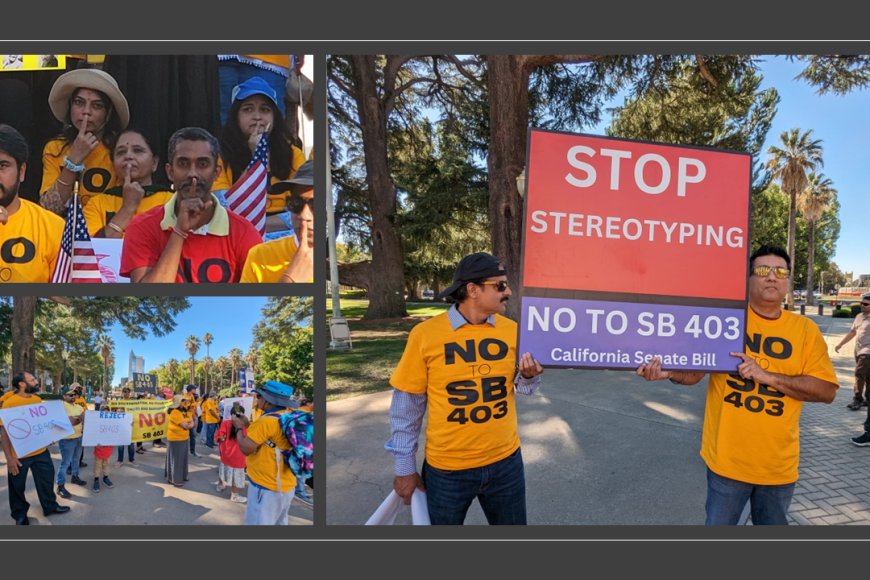
Picture Courtesy: Caste Files
Editor’s Note: Hindus have begun to face threats from the extremist left and right wings of American society and politics, and the next few years will decide how safe and wise it is for Hindus to call America home if either or both of these extremes begin to exert a larger influence on American public life. This article is in response to one such threat.
***
Introduction
Political parties and volunteers across the country are busy strategizing and planning campaigns in the hope of winning the upcoming November elections. The situation is no different in California’s 14th Congressional District, which covers all or part of several East Bay cities, including Hayward, Livermore, Pleasanton, Union City, Dublin, Fremont, Castro Valley, and San Leandro. Following Representative Eric Swalwell’s resignation, California’s 14th District faces a unique dual-election scenario in 2026, with a special August election to fill the remainder of the current term and a November general election for the subsequent full term. Progressive Aisha Wahab and moderate Melissa Hernandez, both from the Democratic Party, will compete in these elections for this safely Democratic seat (Strzemp, 2026). This race holds national significance for many Indian Americans because one of the contestants, Aisha Wahab, authored the divisive Senate Bill 403 (SB-403), a measure that caused considerable distress within the community. The district encompasses cities with some of the highest concentrations of Indian Americans in the United States: 30.3% in Fremont, 27.9% in Dublin, and 21.5% in Pleasanton (Neilsberg, 2025). The overall Indian population in the district is close to 10%, a substantial demographic that could potentially swing the election outcome. Here, we offer some insights into SB-403 and analyze key data points to help voters in CA-14 make an informed electoral decision.
Candidate Profile
State Senator Aisha Wahab is one of the candidates running for California’s 14th
Congressional District in the November 3, 2026, election. Elected to California Senate District 10 in 2022, she was the first Muslim and Afghan-American in the state chamber (Wahab, 2024), following prior service on the Hayward City Council and the Alameda County Human Relations Commission. Wahab holds a B.A. from San Jose State, an MBA from CSU East Bay, and a Ph.D. in Social Work from USC, focusing her legislative career on housing affordability, consumer protection, and social equity (Wahab, 2026). Crucially, she introduced the divisive Senate Bill 403 (SB-403) to ban caste discrimination; however, leaders from the Hindu community claimed she ignored their input during the legislative process, and the bill was ultimately vetoed by Democratic Governor Gavin Newsom.
Melissa Hernandez is the candidate running against Aisha Wahab. She serves as the President of the Bay Area Rapid Transit (BART) Board of Directors, representing District 5 since her election in 2024. Previously, she served four years as the Mayor of Dublin, California, and six years on the Dublin City Council, making history as the city’s first elected Latina councilmember. Professionally, she works as the Director of Health Services for Alameda County. As a single mother of two, Hernandez balanced her family life while putting herself through college, earning a degree in Political Science, Public Affairs, and Administration from California State University. Her regional policy priorities focus on clean energy and environmental sustainability, expanded public transit solutions, and improving economic quality of life by emphasizing public safety, health equity, and support for middle-class families (Hernandez, 2026).
California Senate Bill 403 (SB-403)
North American legislative efforts to ban caste-based discrimination, such as California’s SB-403 introduced by Aisha Wahab, have sparked much discussion and some conflict within the South Asian diaspora. While framed as a step towards civil rights progress, critics and advocacy groups contended that the bill relied on flawed data and sought to create institutional bias that would have unfairly profiled and stereotyped Hindu Americans. Proponents of SB-403 relied on data points that researchers have since proved to be fundamentally flawed. Specifically, the Civil Rights Department lawsuit against Cisco managers was proven to be unfounded and was dismissed by the court for lacking a legal or factual basis (Hernaez & Esler, 2023). The other often-quoted caste survey by Equality Labs failed to meet the foundational standards of statistical rigor and objectivity required for public policy (Badrinathan et al., 2021; Babones, 2023). The bill (SB-403) passed the CA Assembly and Senate, but Governor Newsom vetoed the bill, stating that it is unnecessary because caste discrimination is already prohibited under existing laws (Newsom, 2023).
From a public interest perspective, it remains difficult to ascertain why Senator Wahab prioritized a bill addressing a non-existent caste problem at the beginning of her tenure in the CA Assembly. This raises questions not only regarding her awareness of pressing issues such as homelessness, poverty, and education that affect Californians daily, but also about who was behind the effort to target Californian Hindus. One might question whether this legislative push was an attempt to advance a political career through social justice signaling at the expense of the law-abiding Hindu community. Furthermore, the motivations of the supporting legislators remain unclear—whether their votes were a result of factual ignorance or an implicit bias against Hindus.
While the specific intentions of these legislators may never be known, unless one of their aides writes a tell-all book, there is documented evidence of anti-Hindu sentiment among SB-403’s proponents and established links between these groups and Senator Wahab. Equality Labs, a primary collaborator in this legislative effort, had its hostility toward Hindus captured in a leaked video (CoHNA, 2023), which included the following excerpts:
- “…the Nazis aren’t Germans in f*cking Europe, they’re actually upper caste Indians.”
- “…every single person in the [Hindu] diaspora is culpable for the genocide that’s happening right now in India.”
Equality Labs has a history of anti-Hindu propaganda: for example, Thenmozhi Soundararajan (aka Dalit Diva) of Equality Labs hosted an event where savarnas (general caste Hindus) were accused of being rapists and abusers, simply due to their birth in a particular community (CoHNA, 2023a). Beyond advocacy, a recent report by the Network Contagion Research Institute indicates that extremist social media activity has translated into attacks on and desecration of Hindu temples (NCRI, 2023). Babones (2023) summarizes the nature of this collaborative movement:
The movement against caste-based discrimination led by Equality Labs and other Dalit rights organizations in collaboration with Muslim and Sikh civil society organizations is thus implicitly (if not explicitly) anti-Hindu in intent and execution.
Therefore, the push for caste-based legislation, epitomized by the SB-403 controversy, underscores a troubling trend of institutionalizing Hinduphobic narratives in North American governance and public policy. While proponents frame these initiatives as essential protections for marginalized groups, the reliance on discredited research and the exclusion of Hindu community concerns suggest a different underlying objective. As demonstrated by the collaboration between specific activist organizations and political actors, these legislative maneuvers often serve as vehicles for the spread of broader anti-Hindu sentiment rather than genuine solutions to documented social issues.
Choice for Voters
One wonders whether voters should trust an individual who holds a Ph.D. in social science yet fails to understand the nuances of a flawed survey, uses a lawsuit that was later discredited by a court in CA, and introduces a bill impacting the entire Hindu community across the state. To explain this behavior, we could point to gross negligence as the best-case scenario and a malicious intent to harm the Hindu community (referred to by some as kafirs) as the worst-case scenario. While voters may never know the true intent behind this bill, the central question remains whether they should elect someone with this record to represent them in the U.S. Congress, where a representative must make decisions impacting the lives of millions. Ultimately, this is not a concern solely for Hindu voters; it should concern every law-abiding citizen in District 14.
Because both candidates in the upcoming election for California’s 14th Congressional District belong to the Democratic Party, the electoral decision will be based on individual capability and track record rather than partisan loyalty. Voters should reject a candidate who uses the pretext of social justice to target a law-abiding community that works tirelessly to innovate, build Silicon Valley, and maintain the technological leadership of the United States. Instead of appreciating the immense contributions of the Indian American community to the nation’s economic growth, public health, and technological advancement, this candidate has actively worked to demonize them. Elevating such divisive rhetoric to the federal level not only threatens the safety and civil rights of a law-abiding and successful minority group but also risks undermining the foundational values of equality and innovation that define the country. Consequently, this election serves as a critical referendum on whether representation should favor divisive identity politics or objective, unifying governance that protects all constituents equally while promoting economic growth and technological innovation.
References
- Babones, S. & Vepachedu, S. (2023). The Weaponization of Caste in America. Indian Century Roundtable, Australia. Retrieved July 30, 2026, from https://www.indiancentury.org/research–papers/the–weaponization-of–caste–in–america
- Badrinathan, S., Kapur, D., Kay, J., & Vaishnav, M. (2021). Social Realities of Indian Americans: Results From the 2020 Indian American Attitudes Survey. Carnegie Endowment for International Peace. Retrieved June 15, 2024, from https://carnegieendowment.org/research/2021/06/social–realities-of–indian–americans–results–from–the–2020–i ndian–american–attitudes–survey
- CoHNA (2023, April 6). Who is behind caste legislation in North America, A peek into their track record. Retrieved on July 30, 2026, from https://youtu.be/sGQ4r4ElLyQ
- CoHNA (2023a). FAQ regarding CoHNA’s opposition to SB 403. Retrieved on July 31, 2026 from https://docs.google.com/document/d/1WgOK65_P6zqHRNReA8Lq88YeFRiHJ1Tlwwc1__ZI4yc/
- Hernaez, A., & Esler, A. S. (2023, April 12). Fox Rothschild Employment Team Secures Dismissal of Claims Against Cisco Supervisors. Press Release. Retrieved July 30, 2026, from https://www.foxrothschild.com/news/fox–rothschild–employment–team–secures–dismissal-of–claims–against–ci sco-supervisors#:~:text=Iyer%20and%20Kompella%20
- Hernandez, M. (2026). Melissa Hernandez for Congress. Election campaign page @ https://melissahernandezcom/
- NCRI (2023, April 11). Inauthentic, cyber activity from Khalistani extremist accounts precedes and amplifies attacks on Hindu temples and Indian government buildings. Contagion and Ideology Report, Network Contagion Research Institute. Retrieved on July 31, 2026, from https://networkcontagion.us/reports/4–11–23–inauthentic–cyber–activity–from–khalistani–extremist–accountsprecedes–and–amplifies–attacks-on–hindu–temples–and–indian–government–buildingss/
- Neilsberg (2025, Oct 1). Indian Population in Alameda County, CA by City: 2025 Ranking & Insights. Neilsberg. Retrieved on July 30, 2026, from https://www.neilsberg.com/insights/lists/indian–population–in–alameda–county–ca–by–city/
- Newsom, G. (2023, October 7). Governor Newsom’s letter to Veto SB-403. Sacramento, CA, USA. Retrieved July 30, 2026, from https://www.gov.ca.gov/wp–content/uploads/2023/10/SB–403–Veto-1.pdf
- Strzemp, J. (2026, June 30). Wahab, Hernandez advance to dual showdowns for Congressional District 14. Pleasanton Weekly. Retrieved on July 25, 2026, from https://www.pleasantonweekly.com/news/2026/06/30/wahab–hernandez–advance–to-dual–showdowns–for–c ongressional–district–14/
- Wahab, A. (2024, July 31). In Wikipedia. https://en.wikipedia.org/w/index.php?title=Aisha_Wahab&oldid=1237745430
- Wahab, A. (2026). Aisha Wahab for Congress. Election campaign page @ https://www.aishawahab.com/
