
When Rape Becomes an Argument against Hinduism: On Hinduphobia, Selective Secularism, and the Convenient Politics of Women’s Rights
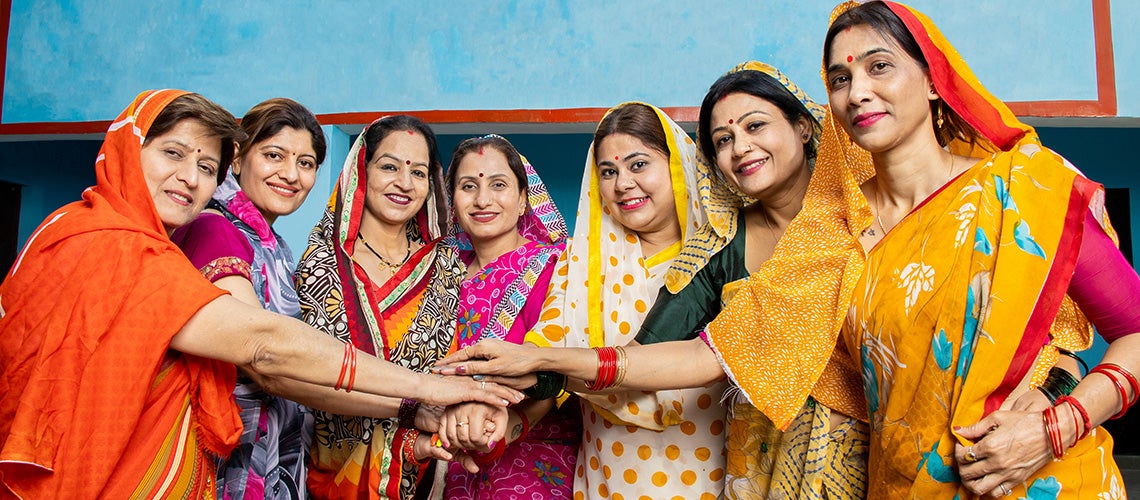
Image Courtesy: World Bank Blogs
Editor’s Note: This commentary is in the context of the gang-rape of a minor girl in Vadodara on a Navratri night two years ago.
A Crime Used to Blame a Religion
Every time there is an incident related to the safety of women during Navratri, the ‘ab yehi log devi ki pooja karenge’ narrative is spun by the media. A crime against a woman is hijacked to critique and pass judgment against Hinduism. Rape is a heinous crime, and it should be condemned without a doubt. Women have every right to raise their voice, demand answers, protest, and ask questions of the institutions – the police, legislators, and even our educational system. But the problem lies in the fact that the moment a crime gets committed during a Hindu festival, the blame turns to Hinduism itself. The victim’s trauma becomes another reason to question the entire civilization. The debate then shifts from justice to a selective appraisal of religions, religious beliefs, and religious institutions.
An offender does not become a representative of Hinduism just because he commits a crime during Navratri. But the discourse almost immediately devolves from the individual to the Hindu society and then ultimately to the Hindu religion. It seems that this political game is played quite easily when the religion involved in the discussion is Hinduism.
Hinduism was never Waiting for Modernity to Discover Women’s Agency
Hinduism has always been portrayed as negative towards women. This assumption is based on the astonishingly selective view of the intellectual history of Hinduism. Hindu women who have knowledge, authority, spiritual power and the capacity for divine intervention did not need the coming of modern feminism for them to understand their role and status in society. Ghosha, Apala, and Lopamudra are some of the women whose names are chanted and whose stories are woven into the Vedas. Gargi and Maitreyi had already engaged in philosophical discourse much earlier than the Western concepts of women’s liberation came into being.
More importantly, Hinduism places the feminine power at the very heart of the divine. Shakti is not just a concept; it is a cosmic power. Durga, Kali, Saraswati, and Lakshmi represent power, wisdom, wealth, and transformative force. Navratri celebrates this very same notion of female divinity. Reducing such a tradition to an inherently misogynistic religious system is basically overlooking the substantial portions of the philosophical foundations of Hinduism.
Historical social practices also need to be separated from religion. Any practice that might have been objectionable within a civilization cannot be assumed that the whole civilization was founded upon that practice. Even the Rigveda 10.18.8, which is often discussed in relation to widowhood, asks the woman sitting by her dead husband to stand up and join the living. The original Hindu texts show that not everything people later did socially necessarily came from the basic teachings of Hinduism.
Hindus have interpreted and reinterpreted texts throughout time, and Hindu society has developed and progressed because of that internal dynamic. Our plurality is not something to be ashamed of or corrected; rather, it is part and parcel of our civilization.
The Scriptural Scrutiny that Conveniently Changes its Standards
The disparity becomes more evident when other religions come into play. While Hinduism is often judged based on historical customs, parts of other religious literature have often been conveniently addressed or dismissed by way of context and theological qualifications. There is no justification to exclude Christianity or Islam from similar judgment if religious writings are used as a basis for determining the status of women in Hinduism.
For example, Qur’an 4:34 states that men shall rule women and outlines a procedure to deal with disobedient wives. The share of inheritances is unequal for male and female offspring in certain conditions, according to Qur’an 4:11, and Qur’an 2:228 speaks of men having authority over women in the context of divorce. These texts have led to a lot of disagreement and debate, including among Muslim scholars today. However, the fact that these rules exist is still important when seriously comparing how different religions deal with gender and women’s rights.
Similarly, Christian scriptures have certain passages dealing with female subjugation and spiritual leadership. Genesis 3:16 describes the husband ruling over his wife. Ephesians 5:22-24 tells the wife to submit herself to her husband, in the manner of the Church submitting itself to Jesus Christ. Colossians 3:18 and Titus 2:5 both speak of submissiveness in marriage. On the other hand, women’s authority to teach is restricted by 1 Timothy 2:11-12, while 1 Corinthians 14:34 asks them to be quiet in the church.
The passages mentioned above do not serve to prove that all Christian and Muslim women are oppressed and that their contemporary adherents follow the strictest understanding of the texts. Instead, it shows the inconsistency in the methodology applied. If one uses the context of history, development of interpretation, and difference between scripture and societal attitudes and behavior when analyzing Christianity and Islam, then it is unacceptable not to do the same in studying Hinduism.
One cannot selectively seek and exercise interpretive sophistry depending on the religion under analysis.
Hinduphobia and the Politics of Selective Representation
Hinduphobia is not necessarily expressed by a clear declaration of hostility. Hinduphobia is evident in the form and nature of the constant repetition that Hinduism is a civilization characterized mainly by its societal failures. Sati, dowry, caste-based discrimination, and superstition are what are usually featured as Hindu traditions, whereas Hindu philosophies and intellectual heritage, as well as the presence of female deities and the power of the feminine, are left out.
We should not be afraid of or reject valid criticism of specific practices. But making the practice equivalent to the whole of the religion is not. It is particularly important to consider this when discussing women’s rights. A Hindu woman celebrating Navratri, worshiping at a temple or performing a puja, or otherwise following any religious practice does not mean that she needs to be liberated from her tradition. Religious devotion does not invalidate her educational accomplishments, her intelligence, or her independence. Feminism cannot advocate the right of women to make their own choices while defining what choices should be made. The idea of liberation as the process of distancing from Hindu traditions perpetuates the very paternalism that feminist and women’s rights movements should oppose. A woman’s autonomy must include the freedom to embrace her religious identity, not merely the freedom to reject it.
Selective Secularism is not Equality
The broader debate exposes the foundational flaw within the discourse of Indian secularism. Freedom of religion, cultural autonomy, and women’s equality cannot be applied selectively. If a practice affects women’s rights, we should examine it fairly. We should not automatically support or criticize the practice just because it belongs to a particular religion. But it seems that public discussion of Hindu customs as objects of permanent correction has become a feature of Indian debate about secularism, while other communities are subjected to little or no scrutiny. Why is that so? The problem is not in questioning Hindu customs. The trouble is in using different criteria to judge and comment upon attitudes, behaviors, and practices based on one’s religious identity.
Secularism should not become a process where Hinduism carries the burden of Indian civilizational ills and shortcomings. Similarly, women’s rights cannot become a debating weapon that is used aggressively against one community and negotiated with the other. It is a simple demand: consistency, comparative scrutiny, and respect for individual choice.
Justice for Women does not Require Hinduism to Stand Trial
Getting back to the controversy that sparked this debate, it is evident that the point of issue is sexual violence. In this case, justice needs to be sought for the victim, legal repercussions need to be meted out to the criminal, and institutions should be held responsible for their negligence in the process of prevention, investigations, and prosecutions. Public outrage should focus on these demands rather than divert attention towards generalized religious commentary focusing on Hinduism.
Navratri is a festival that represents divine femininity. It is not fair to discredit the religious significance of Navratri based on what some do during its celebration, because no one person’s actions can represent the whole religion’s morality. Hindus do not need to apologize for their existence, nor do Hindu women need to repudiate their religion to prove their commitment to gender equality. If the debate is about religion and women’s rights, then all religions should be examined in equal terms of seriousness, evidence, and intellectual honesty.
Rapists should be prosecuted when the crime committed is rape. Patriarchy needs to be investigated wherever it exists. However, if Hinduism is constantly held accountable for the mistakes of individuals, then it could be the prejudices of those judging Hinduism and Hindus that require examination.
