
Beyond Travel, Beyond Time: Antaryatra and the Awakening of Bharat’s Spiritual Consciousness
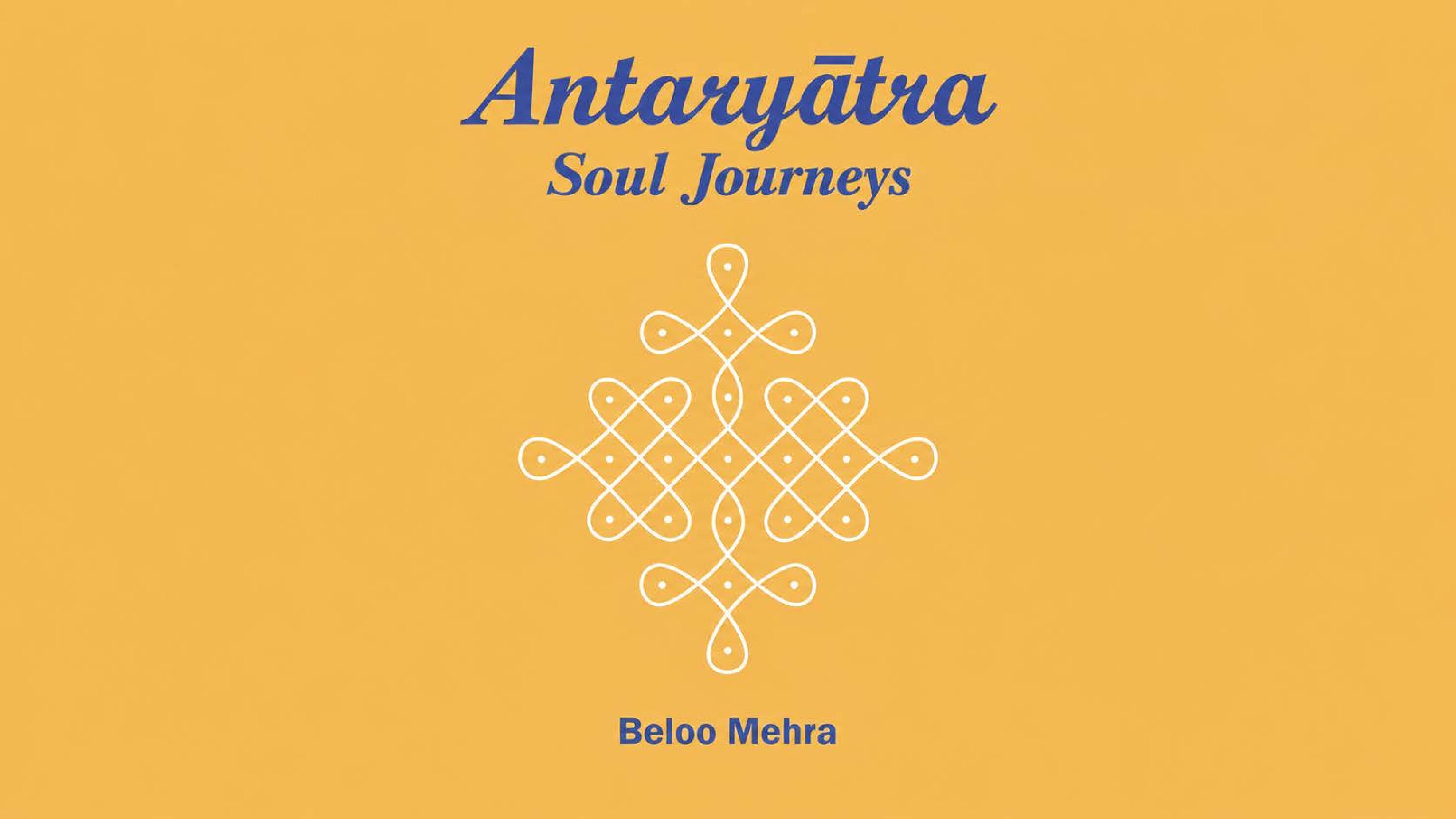
There are books that entertain, books that inform, and books that transform. Dr. Beloo Mehra’s Antaryatra: Soul Journeys belongs to the last category. More than a travelogue or a philosophical treatise, it invites readers to undertake an inward pilgrimage into the timeless spirit of Bharat. At a time when consumerism, instant gratification, and fragmented identities increasingly shape modern life, the book reminds us that the most meaningful immersion is the one into our own consciousness.
True to its title, this literary work continues India’s enduring spiritual tradition, from the Upanishadic quest for self-knowledge and Adi Shankaracharya’s teachings on the atman to the Buddha’s search for enlightenment and Sri Ramakrishna’s direct experience of the Divine. At its centre is Yuvaan, a young seeker whose travels across India’s sacred landscape become a quest of self-discovery. From Varanasi’s ghats and Somnath’s shores to Haridwar and Pondicherry, each destination contributes to his spiritual growth rather than merely marking a tourist itinerary. Inspired by Sri Aurobindo’s vision of India’s renaissance, Dr. Mehra presents a Bharat Darshan that is both geographical and spiritual, celebrating India’s tradition passed down through generations while exploring the universal quest for self-discovery.
A Civilizational Unity beyond Political Boundaries
One of the greatest strengths of Dr. Mehra’s Antaryatra is its portrayal of Bharat as an ancient civilization whose unity transcends political boundaries and geographical divisions. As Sri Aurobindo declared, “India is not a piece of earth; she is a Power, a Godhead.” This vision forms the philosophical heartbeat of the work. Through Yuvaan’s explorations, readers encounter Bharat as a living civilizational consciousness, bound together by dharma and sustained by millennia of spiritual striving.
For those rooted in Sanatana Dharma, Bharat is Punya Bhoomi—the sacred land where rishis realized Truth, the Vedas were revealed, the Upanishads contemplated, and the Ramayana and Mahabharata shaped the civilizational imagination. From the Himalayas to Kanyakumari, its holy places embody a continuum of pilgrimage, devotion, philosophy, art, music, and collective memory. As Swami Vivekananda observed, “Religion is the life of India, religion is the language of this country, the symbol of all its movements.” Here, religion is understood not in a narrow, sectarian sense, but as Sanatana Dharma—the perennial wisdom that has enabled Bharat to embrace diversity while preserving its civilizational unity. As the narrative reminds us, India’s lasting strength extends beyond political power or military conquest, but in the extraordinary legacy of saints, sages, philosophers, poets, and seekers who have explored the highest possibilities of human consciousness.
This unity becomes tangible through the historical trips and institutions that connected India’s diverse regions long before modern nation-states emerged. For thousands of years, pilgrimage routes carried ideas, traditions, and values across the subcontinent, nurturing a shared cultural identity. Devotees from Kerala travelled to Kashi, pilgrims from Kashmir sought Rameswaram, Gujaratis revered Jagannath at Puri, and Bengalis travelled to Badrinath and Kedarnath. Such journeys represented far more than travel; they were expressions of participation in a shared spiritual and civilizational heritage.
Adi Shankaracharya traversed Bharat and established monasteries in its four cardinal directions, strengthening the reach of Advaita Vedanta and reinforcing this cultural interconnectedness. Centuries later, Swami Vivekananda undertook an extensive pilgrimage across India, discovering amid its immense diversity an underlying spiritual bond. Both exemplified a vision of Bharat in which unity did not require uniformity, but emerged from shared spiritual habits that transcended regional boundaries and connected generations. Dr. Mehra’s narrative echoes this perennial vision, portraying Bharat’s unity as a civilizational reality sustained through pilgrimage, philosophical inquiry, and the continuing transmission of Sanatana Dharma.
A Scholar with the Heart of a Sadhika
Dr. Beloo Mehra occupies a distinctive place among contemporary Indian writers. Neither a scholar interpreting Sri Aurobindo from a distance nor merely a devotee producing devotional literature, she writes from a deep engagement with Integral Yoga and Integral Education. Her years of scholarship, teaching, and personal sadhana lend her work an authenticity that goes beyond intellectual understanding.
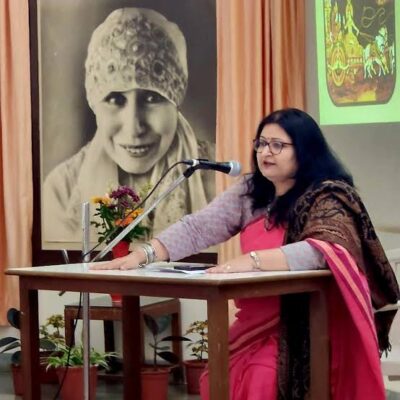
Dr. Beloo Mehra, author of Antaryatra: Soul Journeys
The narrative transcends the boundaries of memoir, travel writing, and philosophy, becoming a reflective dialogue between the individual soul and the civilizational soul of Bharat. The teachings of Sri Aurobindo and the Mother emerge naturally through Yuvaan’s experiences and reflections, enabling readers to encounter Integral Yoga as a lived reality rather than an abstract doctrine.
Equally commendable is Dr. Mehra’s literary restraint. While contemporary spiritual writing often veers towards dry intellectualism or excessive sentimentality, she avoids both extremes. Her prose is contemplative without being obscure and devotional without lapsing into sentimentality. This rare balance is one of the book’s notable strengths.
The Call of Sri Aurobindo
The intellectual foundation of Dr. Mehra’s work rests on Sri Aurobindo’s vision of India’s destiny. His writings, particularly India’s Rebirth, inspire Yuvaan’s transformation, introducing readers to Sanatana Dharma, the soul of the nation, patriotism as a spiritual responsibility, and the integral development of human personality. Sri Aurobindo emerges beyond a historical figure but as a guiding presence whose insights remain relevant to contemporary India’s search for purpose.
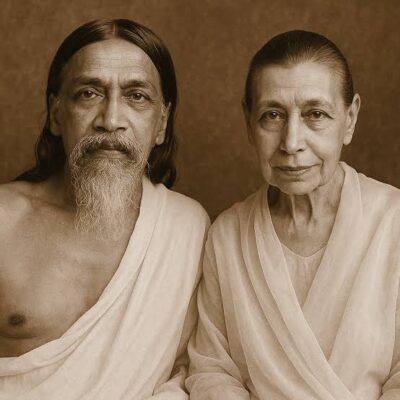
Sri Aurobindo and the Mother
For Sri Aurobindo, India’s freedom was not an end in itself but the means to fulfil a greater spiritual mission. He declared: “The Sanatan Dharma, that is nationalism.” This assertion reflects his conviction that India’s national identity is inseparable from dharma and its universal spiritual ideals, rather than merely from political power or religious identity. He envisioned a Bharat capable of harmonizing material progress with spiritual evolution.
This elevated understanding of nationalism permeates the narrative tours. Yuvaan’s love for Bharat develops not into hostility towards other nations, but into reverence for a civilization that has upheld universal ideals such as Vasudhaiva Kutumbakam (the world is one family) and Sarve Bhavantu Sukhinah (may all be happy). Patriotism thus becomes an expression of gratitude for India’s cultural legacy and its continuing aspiration for the welfare of all humanity.
An Inner Pilgrimage for Modern Youth
Rather than portraying Yuvaan as an idealised saint, Dr. Mehra presents him as a young Indian searching for meaning amid the uncertainties of contemporary life. His questions reflect those confronting today’s youth: What is India’s identity in a globalized world? Can ancient wisdom coexist with scientific progress? Is success measured by wealth and status alone, or does life possess a deeper purpose?
Instead of offering simplistic answers, the narrative allows Yuvaan’s encounters with India’s sacred landscape, history, and philosophical traditions to reshape his understanding. This approach respects young readers’ intelligence, encouraging reflection rather than preaching. Swami Vivekananda’s exhortation, “Arise, awake, and stop not till the goal is reached,” aptly captures the spirit of Yuvaan’s ride towards both personal growth and inner transformation.
Yuvaan represents a generation at a crossroads: one path risks cultural amnesia and materialism, while the other embraces modernity without abandoning India’s civilizational wisdom. Dr. Mehra gently guides readers towards the latter, demonstrating that progress need not demand the rejection of one’s spiritual legacy.
Ultimately, the reflective work transcends the story of an individual traveller to celebrate Bharat—ancient yet ever-renewing, resilient and rooted in timeless wisdom. For those who cherish her as Punya Bhoomi, Karma Bhoomi, Tapo Bhoomi, and Moksha Bhoomi, the book offers affirmation and inspiration. It reminds us that India’s true renaissance goes beyond economic prosperity or technological advancement, but on awakening her people to the spiritual genius that has sustained this civilization throughout the sub-continent across the centuries.
From Sacred Geography to Sacred Consciousness
One of the notable achievements of the volume is its transformation of travel into pilgrimage. At a time when travel is often reduced to sightseeing, photography, and social media updates, Dr. Mehra restores its traditional Indian significance: a sacred passage undertaken to transform oneself.
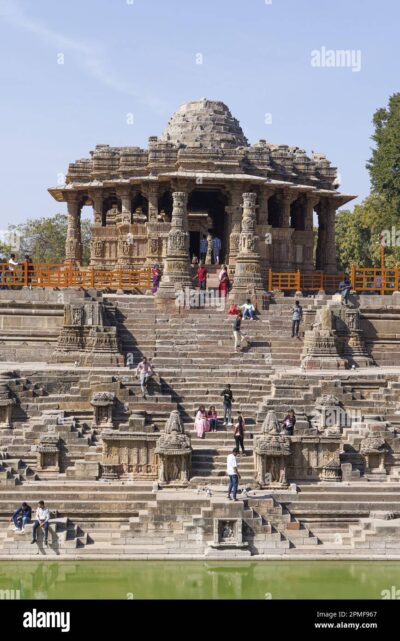
Sun Temple, Modhera, Gujarat
As Yuvaan travels through Haridwar, Varanasi, Ajanta, Ellora, Modhera, Somnath, Dwarka, Pondicherry, and Auroville, he encounters the collective memory of one of the world’s oldest living civilizations. Temples, rivers, and ancient monuments become sources of reflection, while the landscapes of Bharat reveal the lasting influence of Dharma.
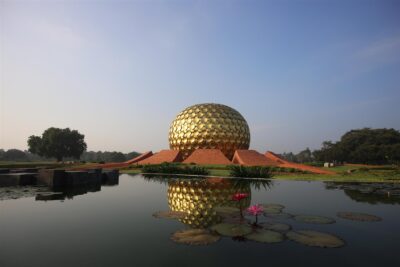
Matrimandir, Auroville
The significance of his travels lies not simply in the distances covered, but in the gradual transformation of his consciousness. The sacred spaces of Bharat become mirrors through which he discovers new dimensions of his own being. The author beautifully conveys a core truth of Indian spirituality—that true pilgrimage is an internal quest with the power to transform both ourselves and our surroundings.
A Nation with a Divine Mission
At the heart of this spiritual narrative lies Sri Aurobindo’s conviction that India’s destiny is inseparable from humanity’s spiritual future. His vision of nationalism transcends political ideology, presenting Bharat as a living embodiment of dharma. This perspective permeates the narrative, which portrays India’s greatness not through historical nostalgia or rhetoric, but through her capacity for spiritual renewal.
Dr. Mehra also explores Sri Aurobindo’s nuanced interpretation of colonialism, encouraging readers to consider history within a broader civilizational and evolutionary framework rather than through simplistic narratives of triumph and tragedy. This approach invites reflection beyond grievance, focusing on India’s resilience and future regeneration.
Transformation begins Within
If Sri Aurobindo provides the philosophical foundation of Yuvaan’s travels, the Mother (of Sri Aurobindo Ashram) illuminates its transformative ideal. Her declaration, “The mission of India is to be the guru of the world,” expresses not a claim to political or economic supremacy, but a responsibility to guide humanity towards higher consciousness. Material progress and scientific advancement, the narrative suggests, must be accompanied by inner development.
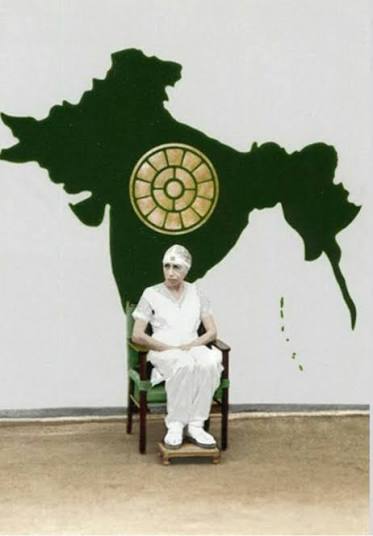
The Mother in front of the spiritual map of India
Yuvaan’s experiences in Pondicherry and Auroville bring this theme into focus. The narrative becomes more meditative, allowing silence and reflection to assume greater significance. The principle “Yoga is change of consciousness” encapsulates this inward transformation. By moving beyond the popular association of yoga with physical postures and stress relief, this exploration restores attention to its deeper purpose: the progressive evolution of human consciousness towards the Divine.
Learning to Become
One of the most significant contributions of the author’s narrative is its exploration of education, enriched by Dr. Beloo Mehra’s longstanding engagement with Integral Education. The book challenges an educational system that measures success largely through examinations, professional achievement, and economic prosperity, arguing that genuine education must nurture the whole person—the intellect, heart, will, imagination, and soul.
Sri Aurobindo’s declaration, “The first principle of true teaching is that nothing can be taught,” encapsulates this philosophy. The teacher’s role is not limited to imparting information but to awaken the potential already within the learner. This philosophy reminds us that knowledge without character can be dangerous and skills without wisdom destructive.
Equally relevant is the book’s critique of education that imitates Western models without adequately recognizing India’s civilizational foundations. Dr. Mehra, however, avoids ideological confrontation. Rather than rejecting modern knowledge, she advocates harmonising it with India’s spiritual heritage. Through its reflections on education, svadharma, and character formation, the story presents a balanced vision of learning that prepares young people not only for professional success, but for a purposeful and responsible life.
Swami Vivekananda and the Awakening of National Consciousness
Though Sri Aurobindo remains the principal philosophical influence on the work, Swami Vivekananda’s spirit permeates its narrative. His travels across India revealed not only the country’s poverty and decline, but the immortal soul of Bharat. His call, “For the next fifty years let this alone be our God—our Motherland,” was an appeal for national regeneration through service, sacrifice, and spiritual realization.
Similarly, Yuvaan discovers that patriotism is expressed not through loud proclamations, but through character, discipline, compassion, and responsibility. Dr. Mehra conveys Vivekananda’s message that “strength is life and weakness is death,” inspiring young Indians to rediscover their inner strength and dedicate themselves to Bharat.
Profound Resonance
This book derives its strength from serene, reflective prose and introspection rather than dramatic conflict or sensational episodes. Its thirty-seven chapters resemble a series of meditations, with each destination, conversation, and quotation contributing to Yuvaan’s gradual awakening. Dialogues with Rishi, Aman, and Pranav lend contemporary relevance, allowing philosophical ideas to emerge naturally.
Dr. Mehra integrates Sri Aurobindo’s writings seamlessly, using quotations as catalysts for reflection rather than ornamental references. This reflects her deep assimilation of the source material and literary maturity. Her language is graceful without being ornate, lucid without being simplistic, and philosophical without compromising readability, sustaining the book’s introspective atmosphere.
Literature as an Instrument of National Renaissance
Throughout India’s history, literature has served as an instrument of moral refinement and civilizational renewal. The Ramayana, Mahabharata, Bhagavad Gita, the Puranas, Kalidasa’s works, and the devotional poetry of Andal, Tulsidas, Purandaradasa, Tukaram, and countless saint-poets have shaped the nation’s moral imagination. The book continues this tradition, reminding us that civilizational renewal requires more than economic reforms, political programmes, or technological innovation; it demands a rediscovery of the ideals that sustained our civilization.
Sri Aurobindo observed, “The spiritual force within not only creates the future but creates the material for the future.” This principle underpins the work, as the gradual stirring of one young seeker’s consciousness becomes a metaphor for the renewal of an entire civilization.
Ultimately, this thoughtful work is not simply about travel but about remembering who we are as individuals and as a civilization — through sacred spaces, Integral Education, Sri Aurobindo’s vision, the Mother’s call for inner transformation, and Swami Vivekananda’s abiding inspiration. From this synthesis of geography, philosophy, and education, Dr. Mehra connects individual self-understanding with the larger renewal of India’s civilization.
Why should Antaryatra Matter in 21st-Century India?
A pressing question for contemporary India is: How do we remain modern without becoming rootless? Economic liberalization, technological advancement, artificial intelligence, and globalization have transformed the country, yet many young Indians risk becoming disconnected from their civilizational tradition while remaining familiar with distant cultures.
Dr. Mehra’s work addresses this challenge without lamenting a lost past or romanticizing a golden age. She encourages readers to rediscover Bharat’s perennial wisdom while engaging creatively with modern challenges. Her message is not to return to the past, but to carry the eternal into the future.
Sri Aurobindo expressed this ideal: “The past is our foundation, the present our material, the future our aim and summit.” This vision permeates the book, which urges India not to blindly imitate her ancestors, but to rediscover the spiritual principles that enabled her civilization to endure through millennia of upheaval and build a future worthy of that bequest.
Patriotism as a Sacred Responsibility
One of the narrative’s greatest achievements is its recovery of patriotism from political rhetoric. At a time when it is often reduced to slogans or dismissed as outdated nationalism, Dr. Beloo Mehra presents love for Bharat as gratitude towards a civilization that has nurtured humanity’s highest spiritual aspirations.
Sri Aurobindo emphasized that nationalism divorced from spirituality remains incomplete, while Swami Vivekananda located India’s greatness not in military conquest or economic wealth, but in her capacity to discover and preserve eternal truths.
Through Yuvaan’s self-discovery, the narrative portrays genuine patriotism as service before self-interest, duty before entitlement, and spiritual awakening before material ambition. Such patriotism inspires responsibility towards one’s civilization without breeding arrogance or hostility towards other nations. In an age of ideological polarisation, this balanced vision of national commitment deserves particular attention.
The Civilizational Thread
The living current of Sanatana Dharma runs quietly through this unique book. Rather than reducing dharma to rituals or sectarian identity, Dr. Mehra presents it as the sustaining principle harmonizing individual life, society, nature, and the Divine. This integral vision connects sacred rivers with philosophy, temples with education, and personal transformation with national resurgence.
Swami Vivekananda observed, “Each nation has a destiny to fulfil, a message to deliver, a mission to accomplish.” The diverse traditions of Indian thought reveal a sustained engagement with questions of consciousness, ethical living, and the ultimate purpose of human existence. Without polemics or cultural triumphalism, the author reminds readers that India’s greatest contribution has been spiritual exploration rather than imperial expansion.
The Upanishads, Bhagavad Gita, Yoga, Vedanta, Bhakti, Tantra, Buddhism, Jainism, Sikhism, and other Indian traditions testify to a shared conviction: human life finds fulfilment through inner evolution. This is the truth that Yuvaan gradually discovers.
The Book’s Literary Contribution
This unique work occupies a distinctive place in contemporary Indian English literature, which often explores colonialism, urban alienation, and social conflicts. Dr. Mehra fills an important gap by portraying India’s spiritual civilization from within its own philosophical framework, without exoticizing its traditions for Western audiences or apologizing for its civilizational convictions.
The book demonstrates that philosophical fiction can retain literary elegance. Its distinctive contribution lies in bringing India’s spiritual and philosophical traditions into contemporary English fiction without sacrificing accessibility or literary elegance. Dr. Mehra’s rare ability to communicate profound ideas with simplicity ensures that readers are never overwhelmed by information. Instead, she invites them to participate in the exploration, reflect on its insights, and discover their own meanings.
The Larger Significance
As India’s international influence grows, the deeper question is how her spiritual and ethical traditions can inform her contribution to humanity. As Sri Aurobindo reminded us, material progress alone cannot fulfil India’s true destiny. Her permanent contribution to humanity lies in the spiritual wisdom and higher consciousness that have distinguished her civilization.
The Mother’s observation, “India is the country chosen by the Divine for the manifestation of the highest spiritual knowledge upon earth,” captures an ideal reflected in Dr. Beloo Mehra’s work. Through its pondering narrative, the book encourages readers to look beyond material achievements and consider the deeper purpose guiding India’s progress.
The book raises vital questions: Can India prosper without losing her soul? Can modern education harmonize with timeless wisdom, and technological advancement with ethical and spiritual values? Can young Indians become global citizens while remaining rooted in Bharat’s inherited wisdom?
These questions extend beyond literature to India’s national priorities, the character of future generations, and the direction of development. Ultimately, they concern Bharat’s civilizational destiny and her responsibility to share the wisdom of Sanatana Dharma with the world.
A Pilgrimage into the Soul of Bharat
An ancient Sanskrit prayer proclaims, “Tamaso ma jyotir gamaya”— “Lead me from darkness to Light.” Yuvaan’s experiences ultimately illuminate the relationship between personal growth and civilizational renewal, suggesting that a nation’s future depends partly on the inner resources of its people.
As India advances towards global prominence, Dr. Mehra reminds us that national greatness rests not just on economic prosperity, technological excellence, or political influence, but also on the culture that has sustained Bharat through the ages. The book’s message is that India’s civilizational inheritance must become a living force shaping the character, aspirations, and responsibilities of future generations. The book carries forward the vision of India’s great thinkers. Bankim Chandra Chattopadhyay’s “Vande Mataram” expresses devotion to the Motherland; Swami Vivekananda inspires strength, fearlessness, and service; Sri Aurobindo envisions India’s resurgence as a contribution to humanity’s future; and the Mother emphasizes the evolution of consciousness. Through its narrative, the book brings these ideals to a new generation. The book’s contemporary relevance lies in its insistence that scientific progress and material development must be accompanied by ethical responsibility and an understanding of India’s cultural inheritance. Its sacred landscapes and philosophical encounters invite readers to translate these values into everyday life.
Dr. Mehra brings these great thinkers’ vision into the present, showing how individual growth can contribute to civilizational renewal. Her work reminds us that India’s renaissance begins when people rediscover the timeless wisdom of Sanatana Dharma and embody its values in their lives. The author’s remarkable achievement lies in transforming an odyssey across Bharat into a profound exploration of the ideas, traditions, and aspirations that shape its civilizational identity. The book deserves to be read not merely as a novel or travelogue, but as a contemporary Bharat Upanishad—a meditation on India’s eternal soul and the inward pilgrimage essential to the renewal of humanity. For those seeking entertainment, countless books await. For readers in search of wisdom, this literary offering provides companionship; for those seeking Bharat, it opens a doorway; and for those seeking their true selves, it offers a pilgrimage.
Some Gentle Observations
The book’s reflective tempo may seem slow to readers accustomed to fast-moving fiction, but it reflects the gradual nature of spiritual growth through silence, introspection, and inner contemplation. Readers unfamiliar with Sri Aurobindo’s philosophy may also find certain passages demanding; a brief glossary or explanatory appendix could improve accessibility for young readers new to Integral Yoga. These observations, however, do not diminish the book’s achievement but suggest possibilities for future literary exploration.
Why Every Indian Should Read This Book
The greatest strength of the author’s work lies not in the knowledge it imparts, but in the questions it awakens. Every generation inherits a civilization whose survival and flourishing depend on whether its youth understand, appreciate, and carry forward its inner spirit.
By encouraging self-questioning and reflection, the book offers young readers an opportunity to connect professional ambition with character, compassion, wisdom, and social responsibility. Yuvaan’s pilgrimage encourages readers to pursue self-discovery, reminding them that success acquires deeper meaning when accompanied by character, compassion, wisdom, and self-knowledge. Material achievement becomes truly fulfilling when guided by an understanding of oneself and one’s social responsibilities.
The book also counters cultural amnesia—the gradual loss of awareness of one’s civilizational roots. Without preaching or dogmatism, Dr. Mehra rekindles confidence in India’s spiritual heritage while encouraging openness to universal knowledge. Its greatest educational contribution lies in showing that pride in one’s tradition can coexist with an open mind towards the wider world.
The chronicle ends with the closing of the book, but its questions remain: Who are we, what do we inherit, and what must we contribute to Bharat’s future?
